
Digital Dentistry
Digital dentistry turns procedures done with conventional methods into computer-aided design and production.
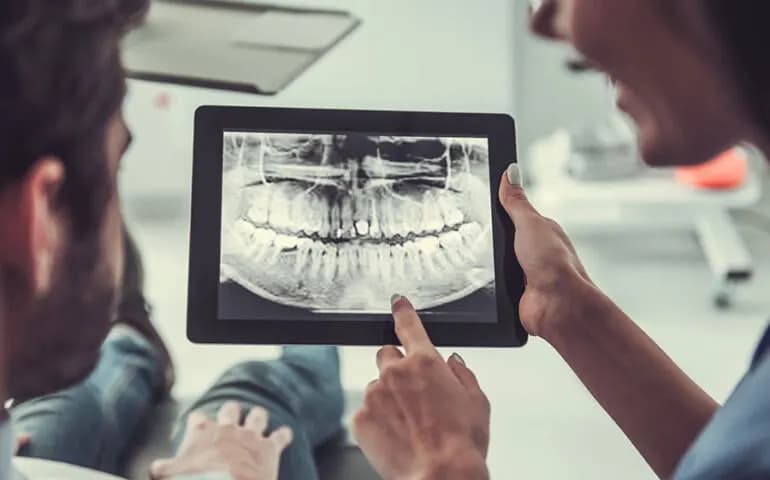
Digital dentistry is carrying out the diagnosis, planning and production stages traditionally done by conventional methods with computer-aided tools. Thanks to digital impressions taken with an intraoral scanner, digital X-rays and design software, treatments are planned on screen; crowns, prostheses and appliances are made according to this digital design. Digital methods help make planning more predictable, especially in prosthetic planning and implant treatment.
At our clinic in Teşvikiye, Nişantaşı, digital methods are used at different stages of treatment, from examination to production. On this page you can find out in which treatments digital dentistry is used, the steps of the process, how long it takes, what to pay attention to and its limits.
In which treatments is digital dentistry used?
- Crowns and bridges: Designing and making zirconia and ceramic crowns from a digital impression
- Smile design: Aesthetic planning with photographs and impressions; for details, see our digital smile design page.
- Orthodontics: Digital planning of clear aligners and bracket placement; for details, see our digital orthodontics page.
- Implant treatment: Planning the position of the implant on X-rays and digital impressions; for details, see our dental implants page.
- Night guards and other appliances: Custom-made from a digital impression
Who are digital impressions suitable for?
Intraoral scanning can be used for almost anyone who needs an impression. It is a more comfortable option, especially for people who feel nauseous with classic impression material. In some situations (for example with some crown margins that extend below the gum, or with fully edentulous jaws) a classic impression may be preferred; the dentist decides which is suitable.
The process step by step
- Examination and imaging: Your teeth are examined; digital X-rays or a panoramic X-ray are taken if needed.
- Intraoral scan: A small scanner is moved over the teeth, creating a three-dimensional digital model within a few minutes. The result can be seen on screen straight away.
- Digital planning and design: The treatment is planned on this model; the crown or appliance is designed on the computer.
- Reviewing the plan with you: In suitable cases, the planned result is shown to you on screen.
- Production: The design is made in the laboratory using computer-aided production methods.
- Fitting and check: The restoration or appliance is tried in the mouth, its fit is checked and it is fitted.
Differences between digital and classic methods
In the classic method, the impression is taken with a tray and impression material placed in the mouth, poured into a plaster model and sent to the laboratory. In the digital method, the teeth are scanned in a few minutes and the model is created directly on the computer. In practical terms for the patient: there is no impression material waiting in the mouth; if an area is missing from the scan, only that area is rescanned; the impression reaches the laboratory electronically; and because the records are stored, changes over time (such as wear or gum recession) can be compared. Classic impressions are still preferred in some situations; the two methods are not alternatives to each other but complementary.
Duration and number of sessions
An intraoral scan takes a few minutes. The total duration of treatment depends on the procedure; crowns and prostheses are usually completed within one to two weeks because of the laboratory work. Sending the digital impression to the laboratory electronically removes the waiting time caused by transporting the impression. Your individual duration becomes clear after the examination and planning.
What to pay attention to
- Keeping your mouth open and staying still during the scan is important for the accuracy of the impression.
- Follow the care recommendations given to you for the treatment you receive.
- Your digital records are archived; they can be used later if an appliance or crown breaks and needs to be remade. Do not skip your check-up appointments.
Possible risks and limits
An intraoral scan involves no radiation and has no known health risk. When an X-ray is needed, it is taken with the lowest possible dose and only when necessary. Limits you should know about:
- The plan is a target: The result shown on screen is a plan; because of biological structure and material properties, the outcome can differ.
- The risks of the treatment itself: The risks of crowns, implants or orthodontic treatment also apply with the digital method.
For questions about digital dentistry, you can book an examination at our clinic in Nişantaşı or message us on WhatsApp.
Frequently asked questions about Digital Dentistry
Is a digital impression more comfortable than a classic one?
No impression material is used when an impression is taken with an intraoral scanner, so it is more comfortable, especially for people who feel nauseous. In some situations the dentist may prefer a classic impression.
Is an intraoral scan harmful?
No. An intraoral scanner involves no radiation; like a camera, it takes images of the teeth.
In which treatments are digital methods used?
They are used in designing crowns and bridges, smile design, planning clear aligner and braces treatment, implant planning and making appliances such as night guards.